Rare-earth-free power

The generator
without the rare earth.

Fe16N2 rotor. Fe4N stator. A split-rotor multiphase generator, from 1 KW to 1 MW, daisy-chained to gigawatts. Iron and nitrogen. No neodymium. No China.

1 KW – 1 MW
// Product ladder
$5 / W
// Or PPA
0%
// Rare earth content
100%
// Domestic supply
01    The problem

Every megawatt of modern generation still runs on a Chinese magnet.

The world's data centers, EV drivetrains, defense platforms, and wind turbines all depend on the same choke point: neodymium-iron-boron magnets. That choke point is one country, one supply chain, and one geopolitical decision away from a hard stop.

01

Supply-chain risk

~95% of neodymium refining happens in China. Every generator, drivetrain, and wind turbine built on NdFeB magnets inherits that dependency.

95% Chinese refining
02

Interconnect delay

Utility-scale projects wait years for grid interconnect. Behind-the-meter modular generation avoids the queue entirely.

3–7 yr Typical wait
03

Cost per watt

Legacy modular generation ships at $8–12/W installed. Rare-earth-free magnetics and shared architecture take us to $5/W at fleet scale.

$5 / W Target price
02    Technology

Two crystal structures replace every rare earth in the machine.

The base generator is Bill Mercer's patented split-rotor multiphase architecture. Our substitution swaps two components and only two components.

Rotor magnets: NdFeB → Fe16N2

α''-Fe16N2 holds a saturation magnetization near 2.4 T (up to 3.1 T in strained films) versus NdFeB's 1.6 T. At equivalent air-gap flux the magnet volume drops by roughly 63%. Curie temperature reaches 361–540 °C against NdFeB's 315 °C, so the machine tolerates a wider thermal envelope.

Stator core: silicon steel → Fe4N

Sintered γ'-Fe4N runs with electrical resistivity up to 200× nanocrystalline soft-iron alloys. At 100 kHz switching the core loss falls from 4,048 MW/m³ (0.35 mm laminated Si-steel) to 1,297 MW/m³ – a 68% loss reduction without lamination complexity.

Metric Fe16N2 (ours) NdFeB (legacy)
Saturation magnetization2.4 T (up to 3.1 T)1.6 T
(BH)max~143 MGOe56 MGOe
Curie temperature361 – 540 °C315 °C
Volume at equivalent flux-63%baseline
Feedstock supplyIron + N (domestic)Nd (~95% China)
03    Products

Eight ratings on one architecture. Daisy-chained to gigawatts.

Every unit uses the same split-rotor multiphase core, scaled by pole count, phase count, and cooling – not by redesign. Cable N units through a shared medium-voltage inverter frame and you have a fleet at any total capacity.

01
1KW
IN-1K
Wall cabinet
Commercial UPS, HALO exam-room backup, off-grid cabin main.
02
5KW
IN-5K
Floor cabinet
Residential grid-tie, workshop main, edge compute node.
03
15KW
IN-15K
Skid
Small commercial main, remote lodge, cell-site backup.
04
50KW
IN-50K
Compact container
Farm main, data-center rack row, expeditionary base camp.
05
100KW
IN-100K
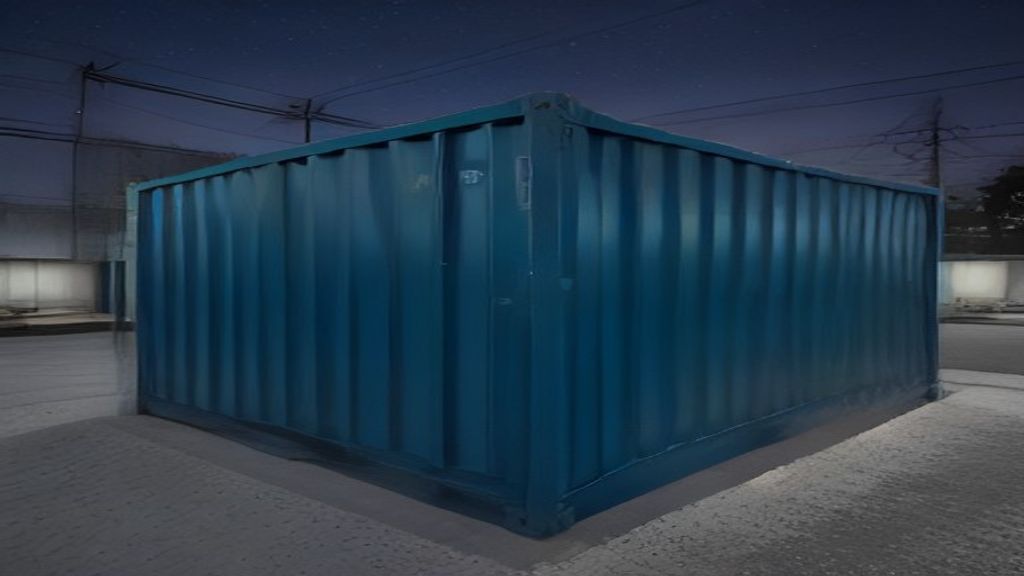
20-ft container
Small commercial campus, tower site, drive-by-intel node.
06
250KW
IN-250K
20-ft container
Substation-adjacent peaker, HALO facility, mid-sized campus.
07
500KW
IN-500K
20-ft container
Substation-scale, mid-size data-center row, defense base-camp main.
// Fleet architecture Cable N×IN-1M containers through a shared medium-voltage inverter frame. Any total capacity, from a 5 MW pilot to a 1 GW utility deployment.
Founder

Bill Mercer III

Inventor of the split-rotor multiphase generator architecture, founder of Iron Nitride, and owner of Business Development LLC – the operating entity behind Biz Dev App, ROSE, xELECTRICITYx, Enwatel, xSMARTLINKx, and the HALO longevity centers.

Iron Nitride is a Bill-led company. He files the provisional patents, writes the technical briefs, negotiates the strategic partnerships, and sets the R&D direction.

05    Get in touch

Bring us a load. We'll bring a box.

Pilots, partnerships, investment, and press – every channel routes through Bill directly. The shortest path is an email.